
Last updated: March 2026
TL;DR: To light a room without overhead lighting, use a layered approach: a floor lamp for ambient fill, table lamps for task lighting near seating, and cordless lamps for flexible accent light. Three to four sources at different heights create the warmth and depth that a single ceiling fixture can't match.
Why So Many Rooms Don't Have Ceiling Lights
If you've moved into an apartment and found that the living room has no overhead light, you're not alone. Most U.S. building codes only require a switched light source in each room — not a ceiling-mounted one. A wall switch connected to a floor outlet satisfies the code. That's why millions of apartments and older homes have living rooms, bedrooms, and dining areas with no ceiling fixture at all.
This isn't actually a problem. Rooms lit entirely by lamps tend to feel warmer and more inviting than those lit by a single overhead source. The key is understanding how to layer light at different heights and positions.

The Three Layers of Light
Layer 1: Ambient Light (Floor Lamps)
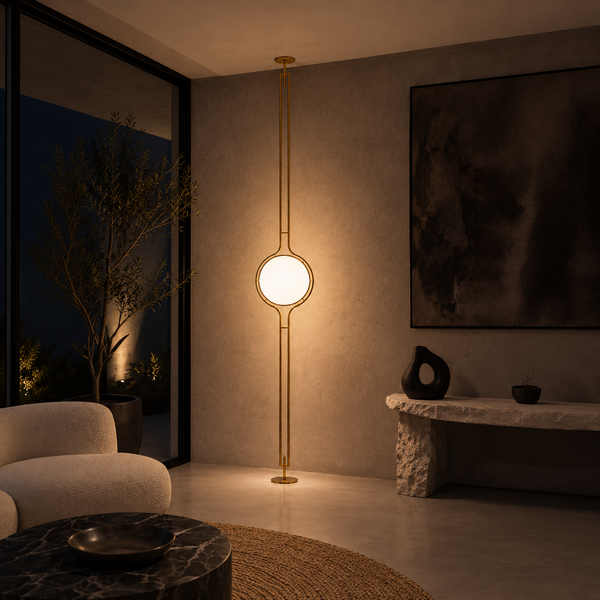
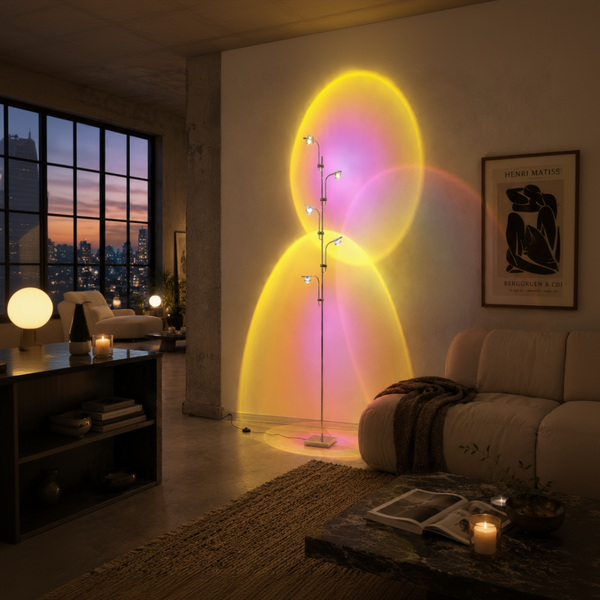
Ambient light is the base layer that fills the room with general brightness. In a room without a ceiling fixture, a floor lamp becomes your primary ambient source. Look for lamps with frosted glass or diffused shades that cast light in multiple directions rather than a narrow beam.
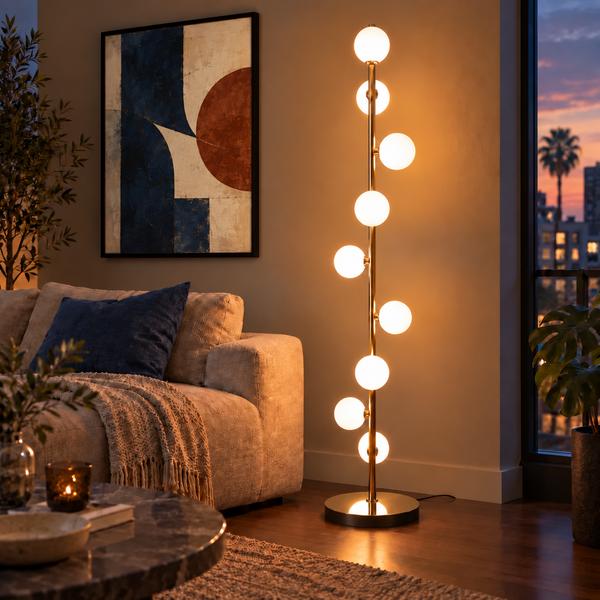
The Pearl Floor Lamp does this exceptionally well. Its nine frosted glass globes scatter light across a wide area, effectively mimicking the coverage of a ceiling fixture while adding visual warmth. Position it in a corner where light can bounce off two walls for maximum fill.
For larger rooms or open-concept spaces, use two floor lamps on opposite sides of the room. This eliminates dark zones and creates balanced light throughout.
Layer 2: Task Light (Table Lamps)
Task light is focused illumination for specific activities — reading, working, getting dressed. Table lamps placed near seating areas, desks, or bedside tables serve this purpose.
The key is positioning: the light source should be beside and slightly behind you relative to what you're looking at. For a reading chair, place a table lamp on the side table so light falls over your shoulder onto the page.

The Glownest Bedside Table is designed for this kind of use, combining a subtle ambient glow with directional light bright enough for reading but soft enough to not disturb a partner.
Layer 3: Accent and Flexible Light (Cordless Lamps)
Accent light adds depth and visual interest. It's the layer that makes a room feel designed rather than simply illuminated. Cordless lamps are ideal because they can go anywhere without an outlet: dining table, bookshelf, mantel, windowsill.
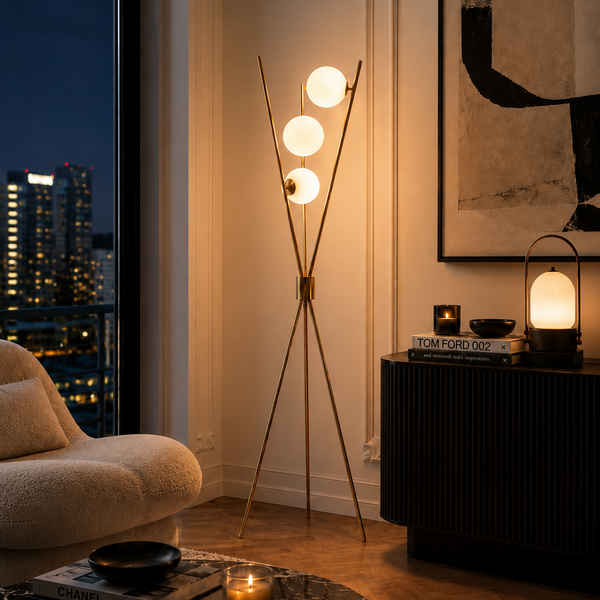
A single cordless lamp on a console table creates a warm pool of light that draws the eye and adds intentional design. The Lumina Lantern Table Lamp works beautifully here — enough light to create atmosphere without competing with your primary sources.
Room-by-Room Guide
Living Room
Start with one or two floor lamps for ambient fill. Add a table lamp beside your primary seating area for reading. Place a cordless lamp on a console table or shelf for accent depth. Total: 3–4 light sources.

Bedroom
A floor lamp in one corner for soft ambient light. Matching table lamps or bedside lamps on each nightstand for reading. An optional cordless lamp on a dresser for gentle accent light when winding down. Total: 2–4 light sources.
Dining Area
One or two cordless table lamps placed directly on the dining table replace overhead pendants and candles. A floor lamp near the wall provides supplementary ambient light. Total: 2–3 light sources.
Home Office
A desk lamp for task light is essential. Add a floor lamp behind or beside the desk to reduce eye strain from screen contrast. If the office doubles as a meeting space, a cordless lamp on a side table adds warm fill light that improves how you look on video calls. Total: 2–3 light sources.
Common Mistakes to Avoid
Relying on a single lamp: One floor lamp creates a bright spot and leaves the rest in shadow. You need at least two sources at different heights and positions.
Using only cool white light: Cool white (5000K+) is energizing for task work, but an entire room lit in cool white feels clinical. Use warm white (2700–3000K) for ambient and accent layers; reserve cool white for tasks.
Ignoring height variation: If all your sources sit at the same height, the room feels flat. Mix floor lamps (60–72 inches), table lamps (18–24 inches), and accent lamps on shelves to create vertical interest.
Bottom Line
A room without overhead lighting isn't a limitation — it's an opportunity to create better, more intentional light than any ceiling fixture could. Layer ambient, task, and accent light at different heights, use warm white as your base tone, and place at least three light sources in any room where you spend significant time.
Read our Floor Lamp Placement Guide for specific positioning rules. Explore floor lamps and cordless lamps at La Caza Cali.