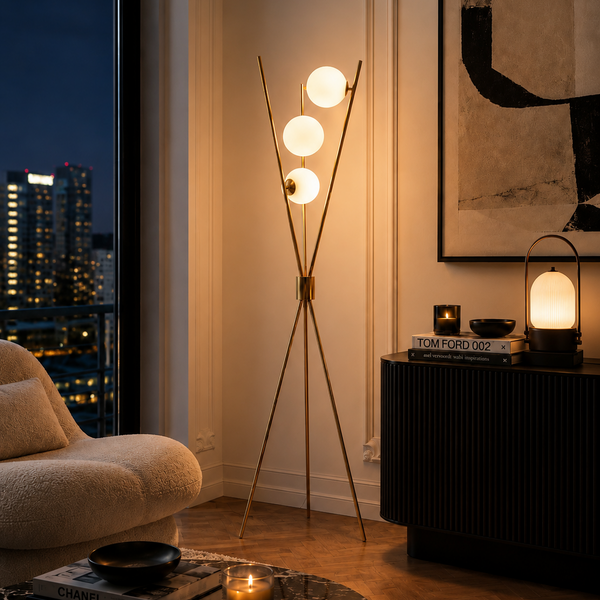

Last updated: November 2026
TL;DR: Light a living room in this order: look at it at night, light the darkest corner first, add a light beside every seat where someone reads, add a low glow at eye level, choose one statement lamp, keep the whites consistent, and make it all easy to dim. Most living rooms need at least three light sources at different heights, and larger or open-plan rooms need five or more. One ceiling light on its own is never enough.
Step 1: Look at the room at night
A room that feels bright at noon can feel flat after dark. Turn on the lights you have now, sit where you usually sit, and notice three things: which corners stay dark, where you read or use your phone, and whether the light makes faces look harsh. That short list is your plan.
Step 2: Light the darkest corner first
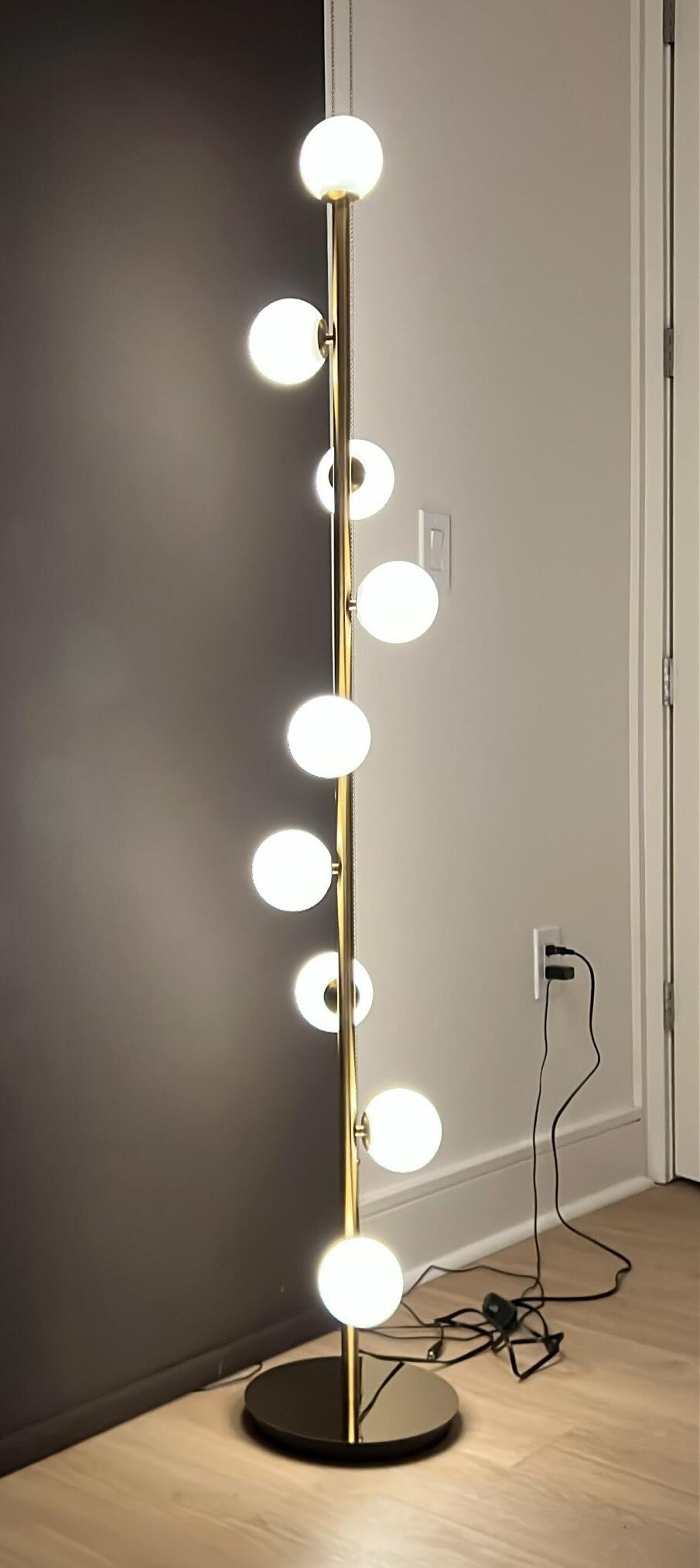
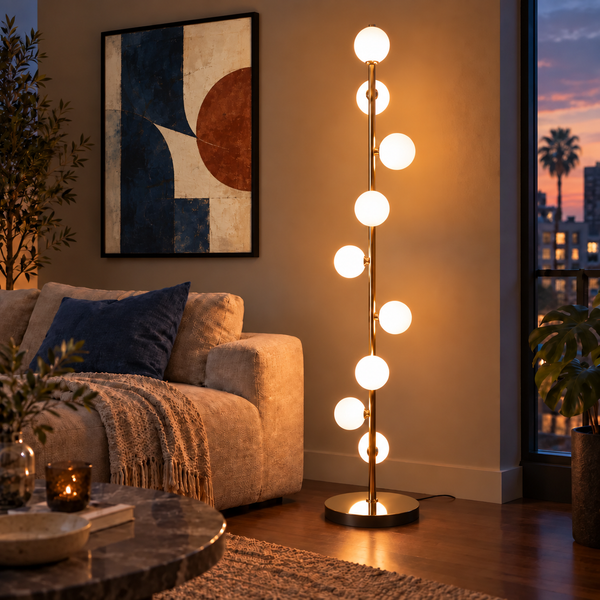
Dark corners make a room feel smaller. A tall lamp in the darkest corner washes the nearby walls and ceiling with light and makes the whole room feel wider. Good choices:
- Pearl (61 in) or Triglobe (64 in): soft, even glass globes with a dimmer knob.
- Caviar (56.7 in): six chrome domes you can turn to aim the light at a wall or into the room.
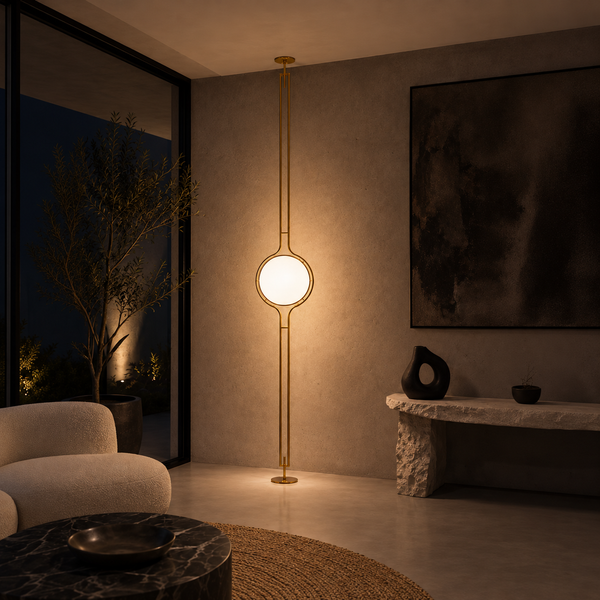
- No overhead light at all? A floor-to-ceiling lamp like Pluto or Vector gives a tall, central source. Vector's two upward cones also bounce light off the ceiling. See how floor-to-ceiling lamps mount.
Step 3: Put a light beside every reading seat
Every chair or sofa end where someone reads needs its own light, close by and slightly behind the shoulder. About 2 to 3 feet from the seat works well; our floor lamp placement guide covers the exact spots beside a sofa, in a corner and behind a reading chair.
Step 4: Add a low glow at eye level
Floor lamps light the top half of the room. Table lamps on a console, sideboard or side table fill in the middle, at the height of your eyes when you sit, which is what makes a room feel warm in the evening. Try Projekt on a console, Mirroir on a side table, or Wick, which also warms a scented candle. Cordless lamps like Kana go on shelves and coffee tables where there is no outlet.
Step 5: Choose one statement lamp
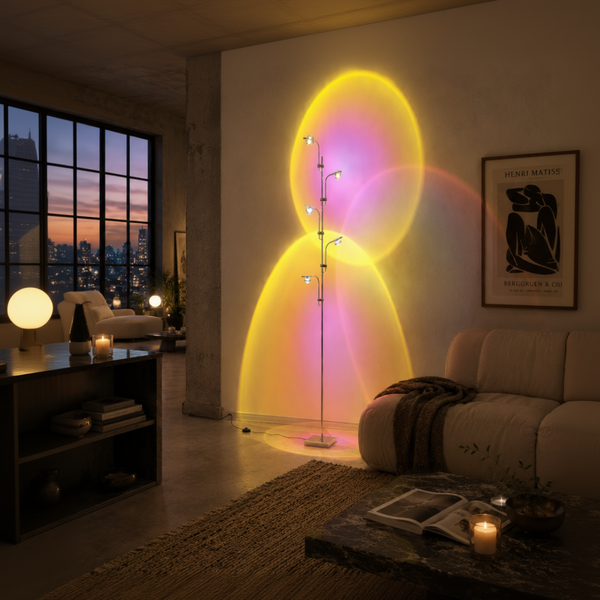
One lamp should be the thing people notice. Keep the others quieter so it stands out. Molten brings slow-moving wax, Polynescence five glowing chrome arms, and Saturn a gloss-chrome dome. For more ideas, see the best sculptural floor lamps for a living room.
Step 6: Keep the whites consistent
Mixing a cool white bulb with a warm white one in the same room makes it look patchy. For evenings, choose warm white (around 2700K to 3000K) for every lamp in the room. If a lamp lets you change its color temperature, set them all the same.
Step 7: Make it easy to dim and switch
A living room changes job through the evening: reading, dinner, a movie. Dimmable lamps let one setup cover all of it. A lamp with the La Caza Smart Bulb goes further: you can switch the whole mood with a scene like Friends Over, Happy Hour or Movie Night, ask Siri, or let the light follow your day on its own.
How many lamps does a living room need?
| Room | Rule of thumb |
|---|---|
| Small living room | At least 3 sources: one tall lamp in a corner, one beside the main seat, one low lamp on a side table or console |
| Medium living room | 4 to 5 sources: add a second reading light and a statement lamp |
| Large or open-plan room | 5 or more: light each zone (seating, dining, reading) on its own |
How to make a dark living room brighter
- Light the corners, not the middle. Light on the walls makes a room look bigger than one bright spot in the center.
- Bounce light off the ceiling. Upward light spreads further than downward light.
- Use reflective finishes. Chrome and glass shades throw light back into the room.
- Add light without outlets. Cordless lamps go on shelves and tables far from the wall.
- Raise the brightness, not the coolness. A brighter warm white looks better at night than a cooler bulb.
Common beginner mistakes
- Relying on one ceiling light.
- Putting every lamp at the same height.
- Using cool white bulbs in the evening.
- Standing a reading lamp too far from the seat.
- Running cords across walkways instead of using a cordless lamp.
For a fuller explanation of ambient, task and accent light, see how to light a room without overhead lighting.
FAQ
What is the best way to light a living room?
Use several lamps at different heights instead of one bright source: a tall lamp in a corner, a reading light beside each seat and a low lamp at eye level, all in the same warm white.
Warm or cool white for a living room?
Warm white (around 2700K to 3000K) for evenings. Cooler, brighter white suits daytime tasks.
Where should a floor lamp go in a living room?
Beside or slightly behind the sofa or a reading chair, about 2 to 3 feet from the seat, or in the darkest corner. See the placement guide.
Can I light a living room with no ceiling light?
Yes. Start with a floor-to-ceiling lamp or a tall floor lamp in a corner, then add table and cordless lamps.
Bottom line
Work corner first, then seats, then eye level, then one statement lamp. Keep the whites warm and matching, and make dimming easy. That's a living room that looks good from morning to movie night.